Dream meaning
Teeth falling out
The short answer
Dreaming that your teeth fall out, crumble or break usually reflects worry about how you appear to others, losing control, or a change you can't stop. It is one of the dreams people ask about most and tends to come in periods of stress or self-consciousness.
18.8% of people in the study had had this dream. No. 38 of the 55 typical dreams · Nielsen et al., 2003
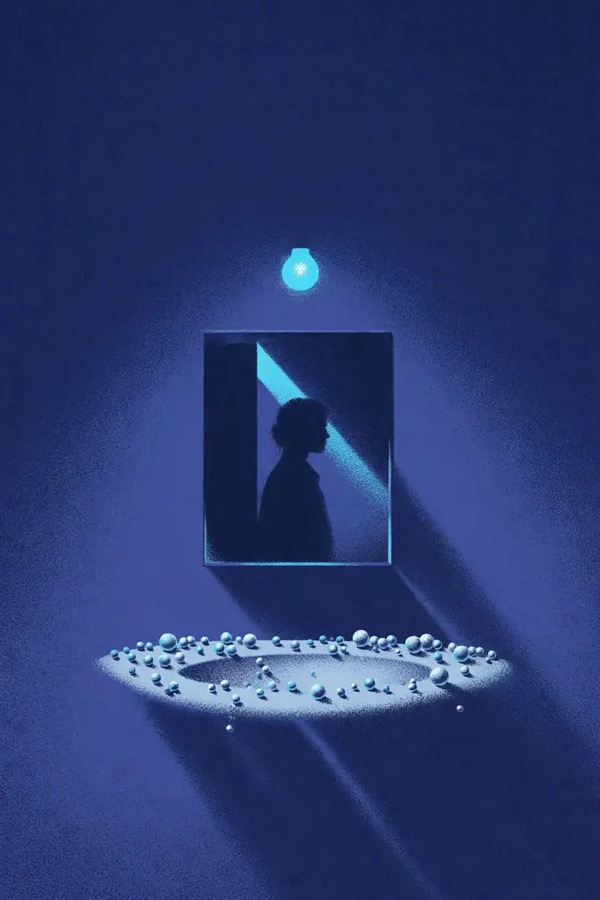
What does a dream about “Teeth falling out” mean?
What psychologists say
Researchers link teeth dreams to stress and to concern with appearance and social evaluation. Some studies suggest teeth grinding or dental sensations during sleep can contribute. Under the continuity hypothesis, the dream often comes when you feel you might lose face, or when you have been unable to say something important.
Schredl & Hofmann, 2003; Domhoff, 2003
The Jungian reading
A Jungian reading sees teeth as power and the ability to take a bite of life. Losing them can mean losing a defence or a way of asserting yourself, sometimes as part of growing into a new stage, as children lose milk teeth before adult ones.
Jung, 1964
In history and folklore
Artemidorus read teeth as members of the household and possessions, so losing them meant losses in the family or in property. Many folk traditions read the dream as foretelling a death, a belief with no evidence behind it.
Artemidorus, Oneirocritica
How common is this dream?
18.8% of people in the study had had this dream. From a survey of 1,181 first-year university students in three Canadian cities. No. 38 of the 55 typical dreams.
Common versions of this dream
What if my teeth crumble?
Crumbling teeth match a slow sense of things slipping, such as confidence, health or control.
What if I pull my own teeth out?
Pulling them yourself can mean you are choosing to let go of something, even painfully.
What if there's blood?
Blood adds intensity; it often matches a loss that hurts, not a literal injury.
Dreams that often come with it

Had this dream? Tell it to Oneiros.
Oneiros reads your own dream, not a dictionary entry: what it was about, how it felt and what it may mean for you, and it notices when it comes back.
Oneiros offers reflective readings for self-discovery and entertainment. It is not a medical or psychological service.
Sources
- Nielsen, T. A., Zadra, A. L., Simard, V., Saucier, S., Stenstrom, P., Smith, C., & Kuiken, D. (2003). The typical dreams of Canadian university students. Dreaming, 13(4), 211–235. doi:10.1023/B:DREM.0000003144.40929.0b
- Schredl, M., & Hofmann, F. (2003). Continuity between waking activities and dream activities. Consciousness and Cognition, 12(2), 298–308. doi:10.1016/S1053-8100(02)00072-7
- Domhoff, G. W. (2003). The Scientific Study of Dreams: Neural Networks, Cognitive Development, and Content Analysis. American Psychological Association.
- Jung, C. G. (Ed.) (1964). Man and His Symbols. Aldus Books.
- Artemidorus of Daldis (2nd century CE). Oneirocritica (The Interpretation of Dreams). Translated by D. E. Harris-McCoy, Oxford University Press, 2012.